
A 38-year-old woman arrested here last week was allegedly preparing to travel to Pakistan via Nepal to marry a suspected terrorist commander believed to be a close associate of banned Jaish-e-Mohammed chief Masood Azhar, officials said in Jaipur on Thursday.

Sources in the Intelligence Bureau told rediff.com that the Indian Mujahideen is a creation of the Bangladesh-based Harkat-ul-Jihadi and the rejuvenated banned outfit SIMI. The Indian Mujahideen had in an email claimed responsibility for the UP blasts. Though investigating agencies probed into the antecedents of this new outfit, finally they came to the conclusion that the blasts were undertaken by HuJI.

The high court, however, directed the trial court concerned to conclude its trial in the case by taking up hearing at least twice a week, noting that the accused have been behind bars since 2008.

The preliminary forensic sciences laboratory report on the Bodh Gaya blasts may have ruled out the use of RDX to trigger the blasts, but investigators say that the attacks bear resemblance with the blasts carried out at Ahmedabad and Jaipur by the Indian Mujahideen

Four suspected operatives of terror outfit Indian Mujahideen were arrested by Delhi police from Rajasthan on Sunday morning.

Investigation reveals Al Falah University's potential links to terror operatives, including a former student involved in multiple blasts and doctors arrested in connection with a recent terror plot.
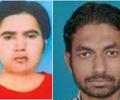
A tug of war was witnessed in a Delhi court between the National Investigation Agency and the Special Cell of Delhi Police for seeking the custody of top Indian Mujahideen operatives Tehseen Akhtar and Zia-ur-Rehman alias Waqas.

On Wednesday, the court had convicted Mohammad Saif, Mohammad Sarwar Azmi, Mohammad Salman and Saifurrehman. Another accused, Shahbaz Hussain, was acquitted with the court giving him the benefit of the doubt. The serial blasts rocked Jaipur on the evening of May 13, 2008 within a two-kilometre radius in the walled city, popular also with tourists.

Sonam Wangchuk is under tight surveillance within the three-tiered prison, with CCTV cameras monitored around the clock.
The ISI strategy has been to use its proxies to target Hindus in India. They want an outrage and counter-targeting of India's minorities. Further, even the whiff of it restores the Pakistan army's popularity, especially when it's in the dumps, like now, points out Shekhar Gupta.

Rohit Shetty's strengths have been action and humour; the former he delivers in spades, but the latter is totally lacking in Indian Police Force, observes Deepa Gahlot.

Judge Vyas observed that it was for the first time that a dozen persons were being convicted for conspiring in a terror attack before they could do any damage.

Special judge AR Patel will hear the arguments of the defence on Tuesday, special public prosecutor Sudhir Brahmbhatt said.
This was just one of the mails that was sent out by the Indian Mujahideen prior to the deadly blasts in Ahmedabad in 2008 which killed 56 people, injuring 200 others.

One more suspected Indian Mujahideen terrorist allegedly involved in the Pune serial blasts in August has been arrested in Jaipur by the Delhi police, taking the total number of arrests to four.
Following the serial blasts in Mumbai on Wednesday, the six other cities which have been identified as potential targets of the Indian Mujahideen are Jaipur, Delhi, Ahmedabad, Mangalore, Bangalore and Goa.
However, according to investigation officers, the plan had to be aborted following the crackdown on SIMI activists in Karnataka. The task of stealing cars and motorcycles was entrusted with Riazuddin Nasir, son of Moulana Nasiruddin who is an accused in the Haren Pandya murder case.
In a major breakthrough, the Uttar Pradesh police have taken into custody a cyber cafe owner at Sahibabad in Ghazaibad district of the National Capital region (NCR) from where the e-mail claiming the responsibility for Tuesday's serial blasts in Jaipur was sent by the militant outfit Indian Mujahideen. The Ghaziabad police confirmed the news of taking Madhukhar Mishra and his son into custody for interrogation.
An intercept picked up by the Intelligence Bureau suggests that Subhan, whose code name is Kasim, had crossed over into PoK via Nepal after the serial blasts in New Delhi.

The hijackers of an Indian Airlines plane in 1999 -- Abdul Rauf Asghar, Ibrahim Athar and Yusuf Azhar -- have also been named in the list, prepared under provisions of the amended Unlawful Activities (Prevention) Act.

'Not afraid to look Muslim, not shy of flaunting her nationalism.' 'With a willingness to fight carrying the Constitution, the Flag, the Anthem, Ambedkar, Gandhi and the chant of 'Hindustan Zindabad',' notes Shekhar Gupta.

Reversing the burden of evidence means that the principle of innocent until proven guilty does not apply. It is exactly the opposite: Guilty as charged, until you can convince the judges of the contrary, points out Shekhar Gupta.
While convict Ariz Khan was awarded the death penalty by a trial court, Shahzad Ahmed was sentenced to life imprisonment in the case.

He was a member of Azamgarh (Sanjarmur) module of the IM and was based in Nepal where he was teaching at a school.

Indian Mujahideen co-founder Yasin Bhatkal, arrested from the Indo-Nepal border in north Bihar, is wanted in several blast cases being probed by the National Investigation Agency and state police forces. His name had come up in connection with the explosion outside Delhi high court on September 7, 2011 in which 12 people were killed.

A Delhi court Monday awarded death penalty to Ariz Khan for the murder of decorated Delhi Police Inspector Mohan Chand Sharma in connection with the sensational 2008 Batla House encounter case, saying the offence fell under the 'rarest of the rare category' warranting the maximum sentence.

The Delhi Police on Friday filed a charge sheet in a court against suspected top Indian Mujahideen operatives Tehsin Akhtar, Zia-Ur-Rahman and three others for allegedly setting up an illegal arms factory in the national capital from where a huge quantity of arms and ammunition were recovered.
'It is possible that these terrorists took advantage of the chaos and escaped in the melee.'

'Information trickled in that these phone numbers were switched off when there were blasts in Jaipur, Ahmedabad, and at the time of the Delhi blasts.

Those who were held guilty included Safdar Nagori, Javed Ahmed and Atikur Rehman. Among those acquitted were Mohammad Irfan, Nasir Ahmad and Shakeel Ahmed.

Kerala remains a safe haven for members of the IM and the SIMI alike, says Vicky Nanjappa

'Kulbhushan Jadhav is a very sad case.' 'I think Pakistan handled this issue very clumsily.' 'They gave too much of publicity and also said that they will hang him.' 'Now obviously, they are not going to hang him.'
The lone alleged Indian Mujahideen militant facing trial in the 2008 Batla House encounter case in New Delhi has pleaded innocent before a Delhi court while refuting police's claim that he had confessed to his role.

Indian Mujahideen was planning to send letters "soaked with poison" to their targets to kill them, the Delhi Police has told a court here in its charge sheet filed against six suspected men of the terror outfit in a case of allegedly setting up an illegal arms factory in New Delhi.

Top Indian Mujahideen operative Tehsin Akhtar alias Monu, one of the alleged masterminds of a string of terror attacks in India, was on Wednesday remanded to police custody till April 2 by a Delhi court.

Indian Mujahideen co-founder Yasin Bhatkal was on Saturday arrested by the National Investigation Agency Hyderabad in connection with the February 2013 Dilsukhnagar blast case after a Delhi court allowed its plea and granted the probe agency his two-day remand.

Indian Mujahideen co-founder Yasin Bhatkal and his close associate Asadullah Akhtar were on Friday remanded to 12-day police custody by a Delhi court after the National Investigation Agency said their custodial interrogation was required to unearth larger conspiracy of terror attacks.

A Delhi court on Tuesday extended till September 17 the National Investigation Agency custody of Indian Mujahideen co-founder Yasin Bhatkal and his close associate Asadullah Akhtar after the agency claimed they were involved in a deep rooted conspiracy and had executed various blasts in India.

Unlike Al Qaeda, ISIS recruiters are proactive and internet savvy. They know there is angst among Muslims about their helplessness even in a vibrant democracy like India, leave alone other parts of the world where Muslims live. So ISIS feeds them a regular diet of the golden age of the Ummah, creating for these youngsters a live yet make-believe world which is completely disconnected from the reality around them, says Syed Firdaus Ashraf.

As far as India is concerned, the danger is the potential of the IS to create mischief rather than its actual capability as of now, says Rajiv Kumar
